From the workshops of Mbare in the 1990s to advisory work in South Africa today.
Case study · Harare · 1990s
From copy to Maphosa: the first chair
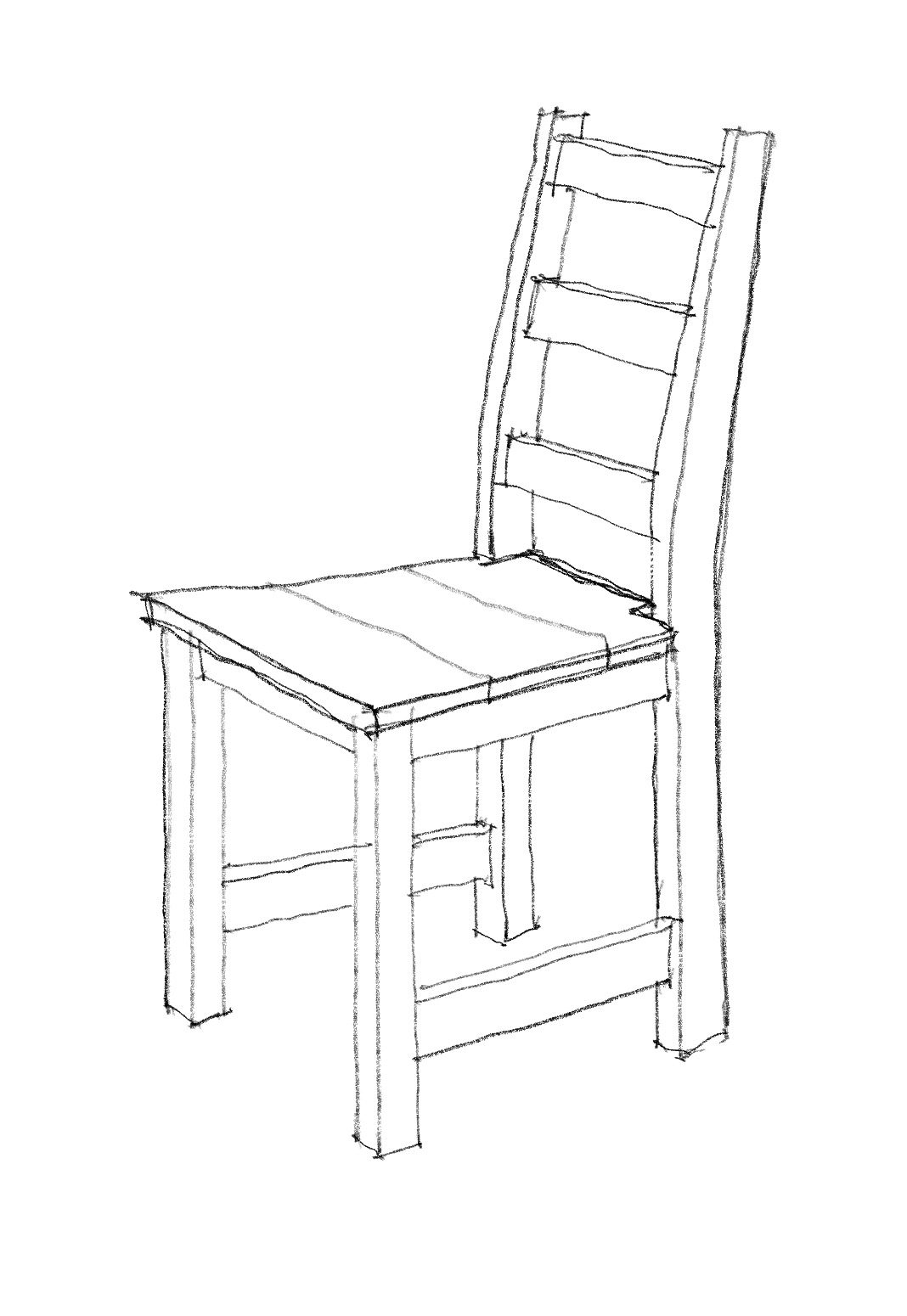
Before. The typical informal-sector chair in Zimbabwe in the 1990s: pine, with a trapezoidal frame and seat, rear legs and backrest cut as one piece, and a seat of planks glued edge to edge. Sketch by Pierre-Yves Panis, 2026, from memory.
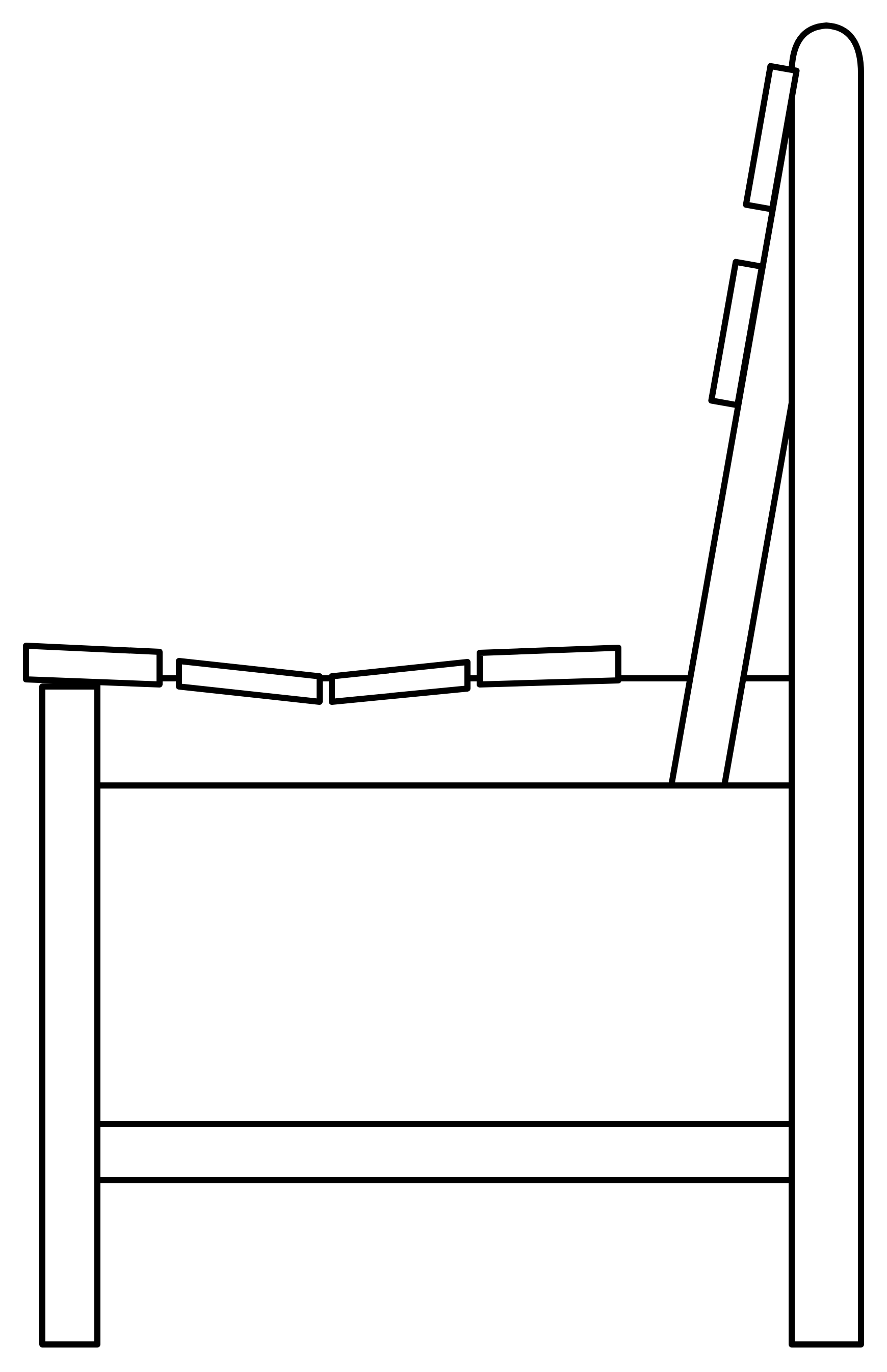
After. Side view of the first Maphosa chair. Straight rear legs; a separate angled member sets the backrest; seat and back in slats. Redrawn from DCO’s 1995 brochure.
The copy
One chair was made and copied all over Mbare. Its original had almost certainly been designed in Europe, for seasoned timber, proper tools and experienced makers. In Mbare it was copied in poorly dried pine. Its front and rear legs were set at different widths, so the seat was trapezoidal and the joints met at an angle, never square. The legs were joined with tenons and mortises. Each rear leg and its backrest were cut from a single wide plank, angled at about 20 degrees. The seat was made of wide planks glued edge to edge.
Why it failed
The wood was still wet. The chisels were pieces of steel shaped to approximate the real tool. The mortises always came out too big for the tenons, and on at least two legs the tenons entered them at an angle. To hold the chair together, makers filled the gaps with a mix of glue and sawdust. The glued seat planks separated as the wood dried. The chair could never be strong or last, and the large planks it required made it expensive to produce.
The redesign
Working with the entrepreneurs, DCO redesigned the chair around their materials, tools and skills:
A rectangular frame, so that every joint is square.
Half-lap joints in place of mortise and tenon, cut accurately with simple tools.
A seat of slats, using short, narrow pieces and offcuts, in place of glued planks.
A separate backrest piece setting the angle from seat to top, so rear legs no longer had to be cut from one wide plank.
Parts designed to be cut in pairs, not one by one.
The result
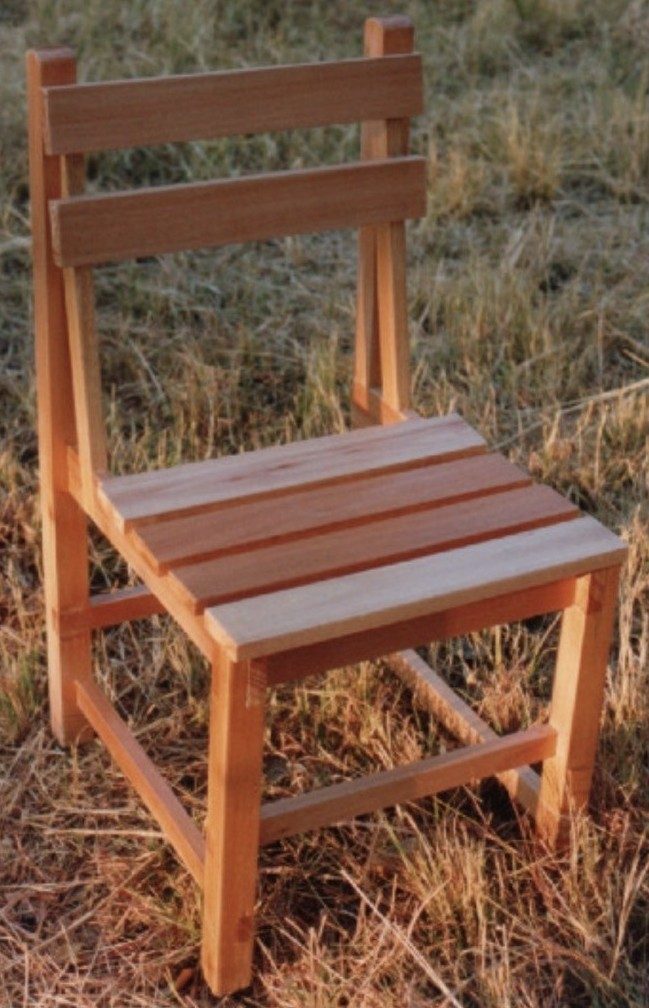
A chair that could be made well with what was available. It used less and cheaper timber, took less time to make, held together, and stood apart from the copies on sale around it. The same principles were then applied to many other DCO products.
[Figures to come: cost, timber saved, price, units]
The first Maphosa chair, which replaced the standard informal-sector chair in Mbare: straight timber, a rectangular frame, slatted seat and back.
Harare · 1995–2000
The Maphosa range
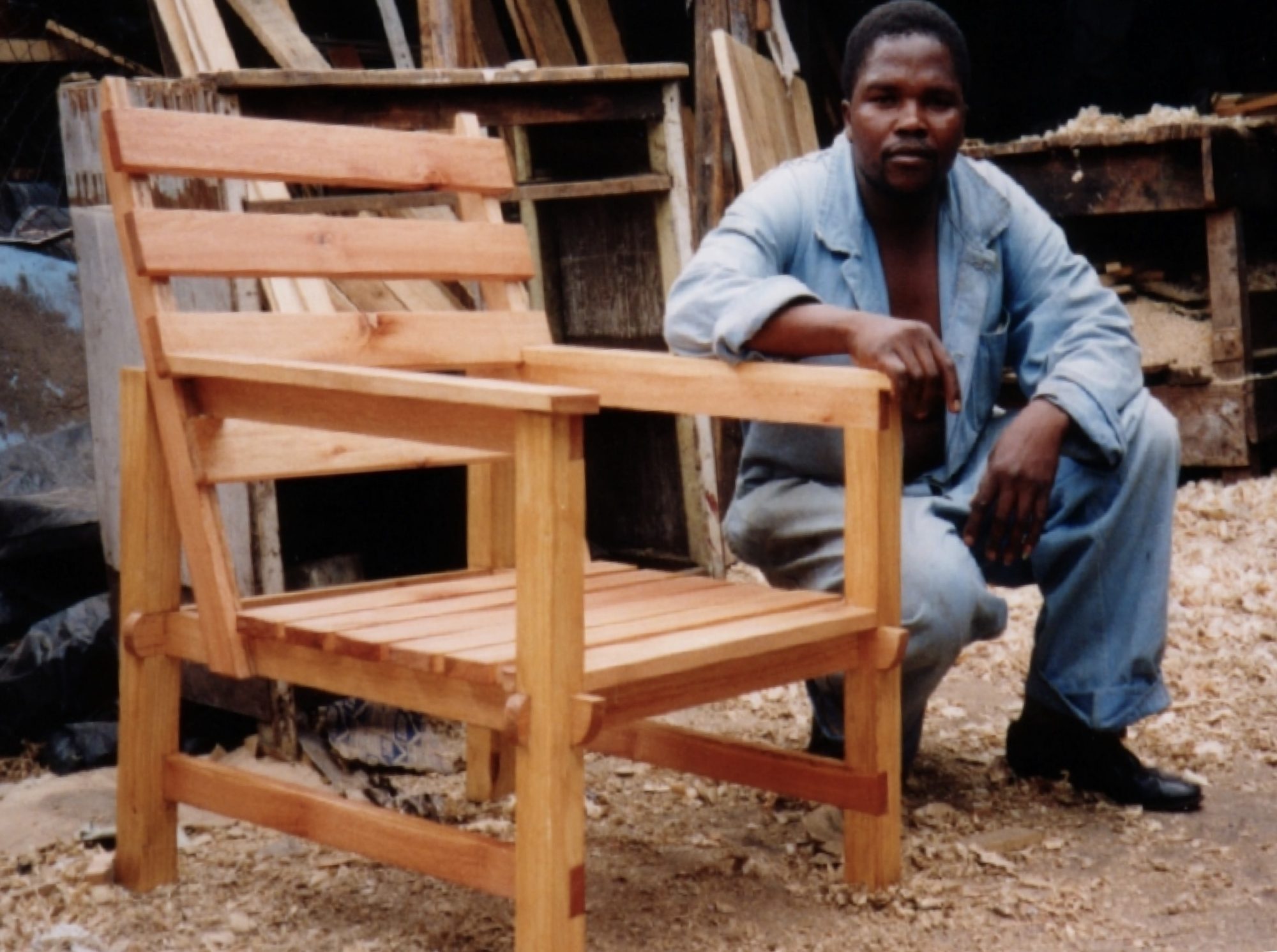
Raphious Maphosa, pausing with one of his pieces: a Verandah armchair. Mbare, 1990s.
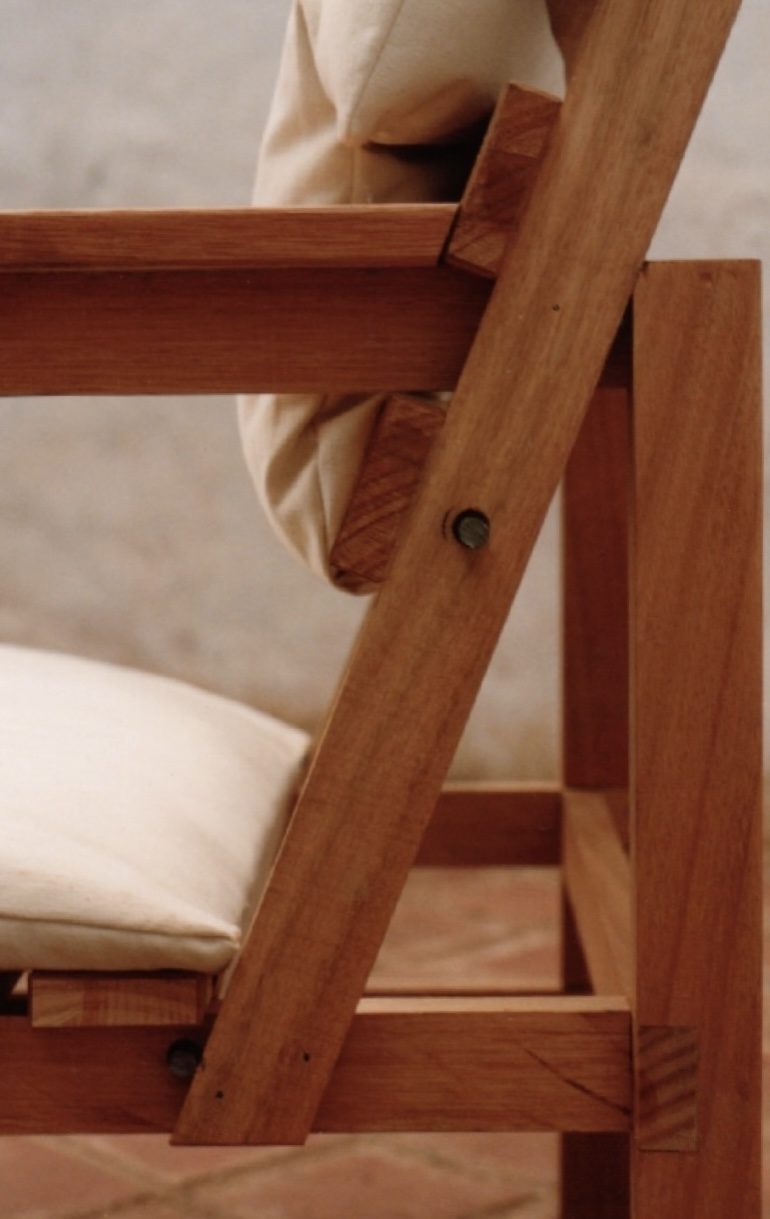
The range is named after Raphious Maphosa, one of its makers. It applied the principles of the Mbare chair across a full furniture line: stools, chairs, armchairs, tables, coffee and bedside tables, benches, sofas, chests of drawers and cabinets. The same frame system, built from straight members joined with half-laps, carried across the range, from chairs to storage. Some versions combined a steel structure with a slatted, upholstered backrest. These needed metal and wood workers, and later upholsterers, to work together. Upholstered versions hung their cushions on removable metal rods, so covers could be taken off and washed.
Many entrepreneurs made it. It sold at the roadside and in informal markets, and it was made to order: among other commissions, armchairs for the library and cinema of the Alliance Française de Harare. It was exported to South Africa, and a few pieces went by container to Mauritius and France. DCO’s lighter products, such as picture frames, medicine cabinets and lamps, travelled further, as far as the United States.
After Pierre-Yves Panis left at the end of 1999, Endrew Zacharia ran production and sales for around four more years, until Zimbabwe’s economic crisis brought them to an end.
2×
the price of the informal-sector equivalent, for the same function and type of furniture
1,500+
units sold between 1995 and 2000
1999
selected for the Design for Development Awards of the South African Institute of Design
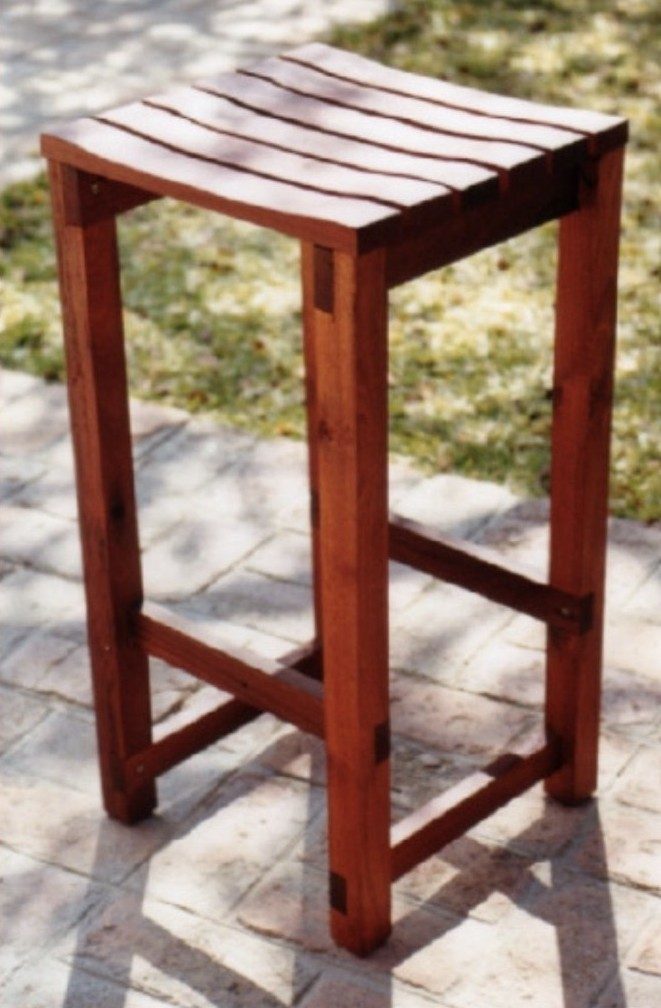
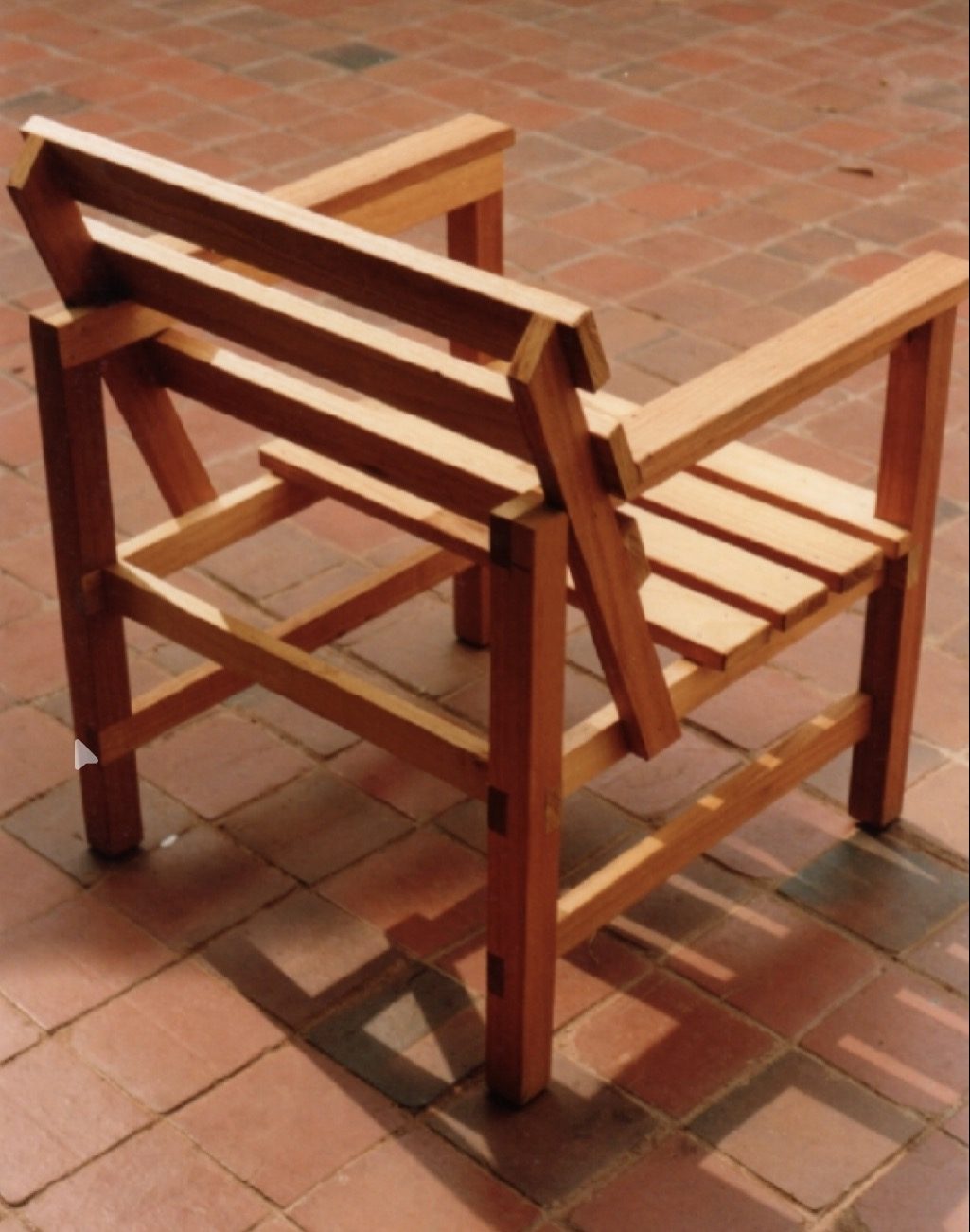
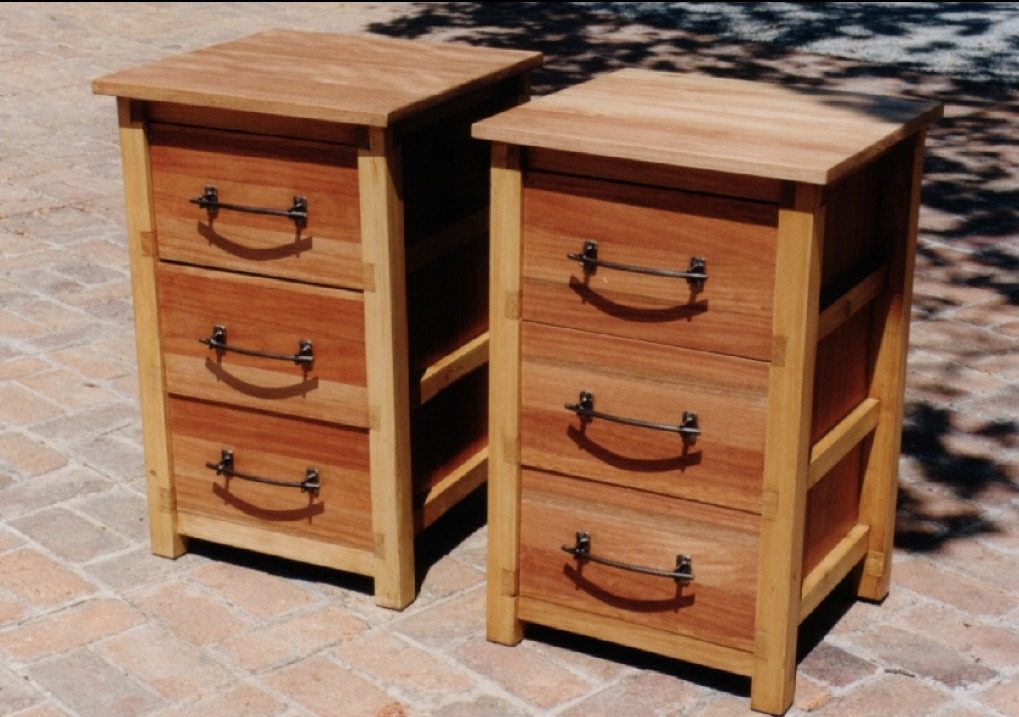
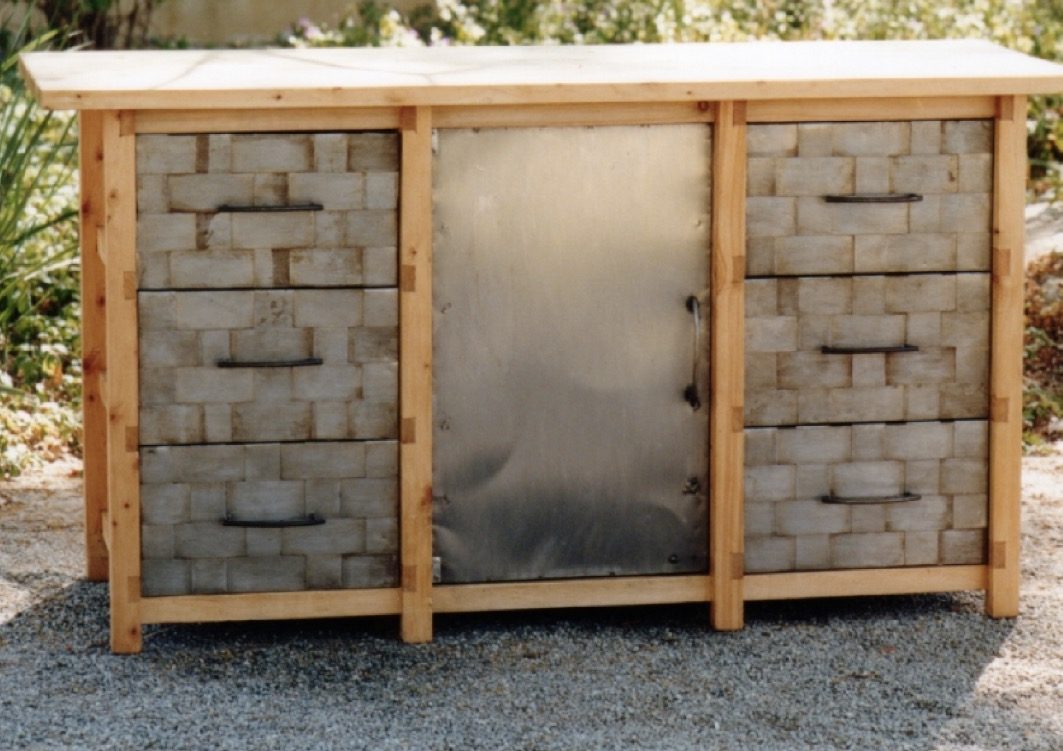
Stool, Maphosa range. The same frame system, with a slatted seat and half-lap joints.Verandah armchair: half-lap joint assembly. The frame is rectangular, so every joint is square, and the backrest uprights are separate pieces fixed to it.Verandah armchair, upholstered version. The cushions hang on metal rods slipped through fabric sleeves, so the covers come off for washing.Chests of drawers. A light timber frame with half-lap joints holds darker drawer fronts with forged steel handles.Cabinet with drawers. A timber frame, a sheet-metal door and drawer fronts woven from metal strips: one piece combining the work of carpenters and tinsmiths.
Materials
Much of the metal came from Mbare’s scrap yards. Tinsmiths cut it into strips and wove them into panels, or punched patterns into galvanised sheet, so that offcuts became drawer fronts, doors and cladding.
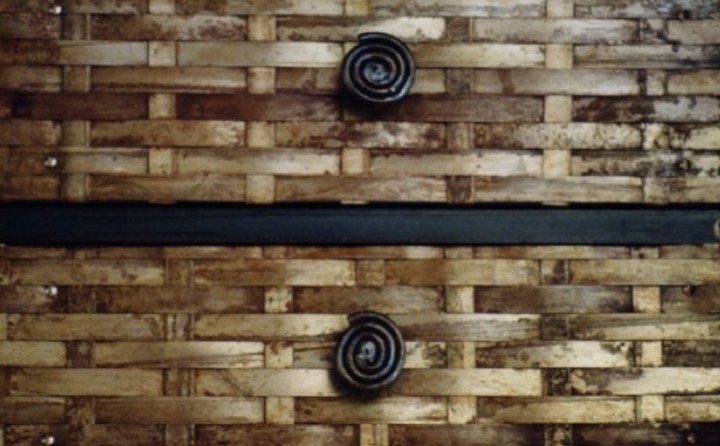
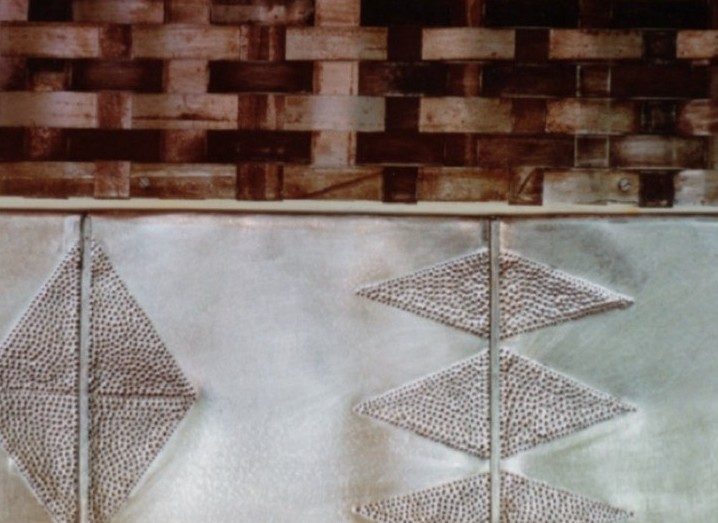
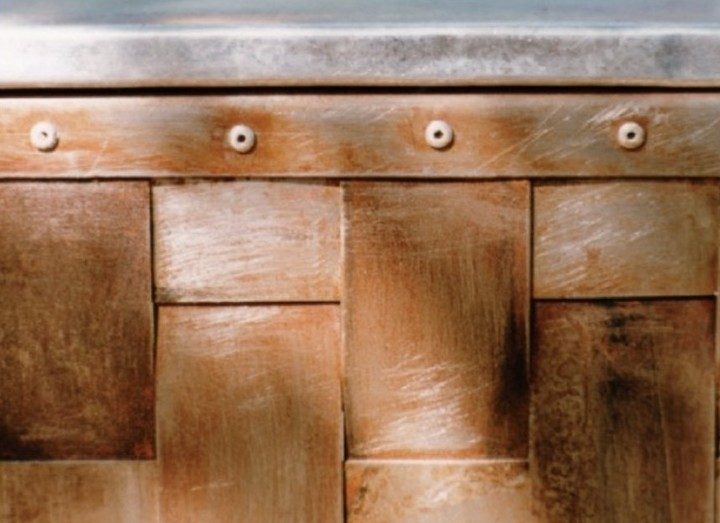
Metal strips cut from scrap, ready for weaving.Drawer fronts in woven metal strips, with forged spiral handles.Woven strips above a galvanised-sheet panel, punched in a diamond pattern.Woven metal panel with a riveted frame.
How an order moved through the group
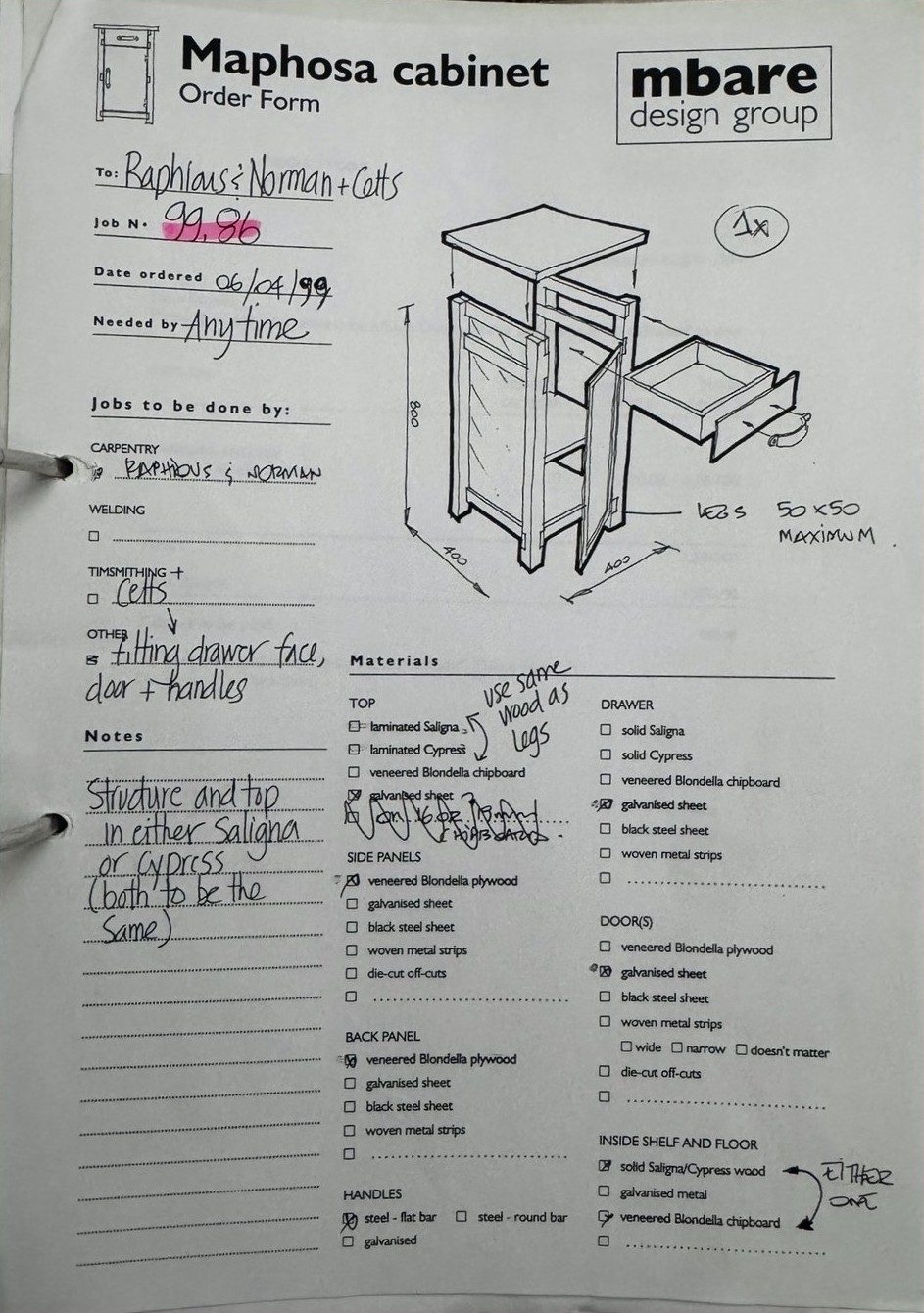
Every order went through a printed form. It named who would do each job (carpentry, welding, tinsmithing) and set the materials from a fixed list: saligna or cypress timber, galvanised or black steel sheet, woven metal strips, die-cut off-cuts. This one, from April 1999, sends a Maphosa cabinet to Raphious and Norman for the carpentry, and to the CELTS for the tinsmithing: five metalworkers, Cephas, Edward, Linda, Tawanda and Stephen, who named their group after their initials.
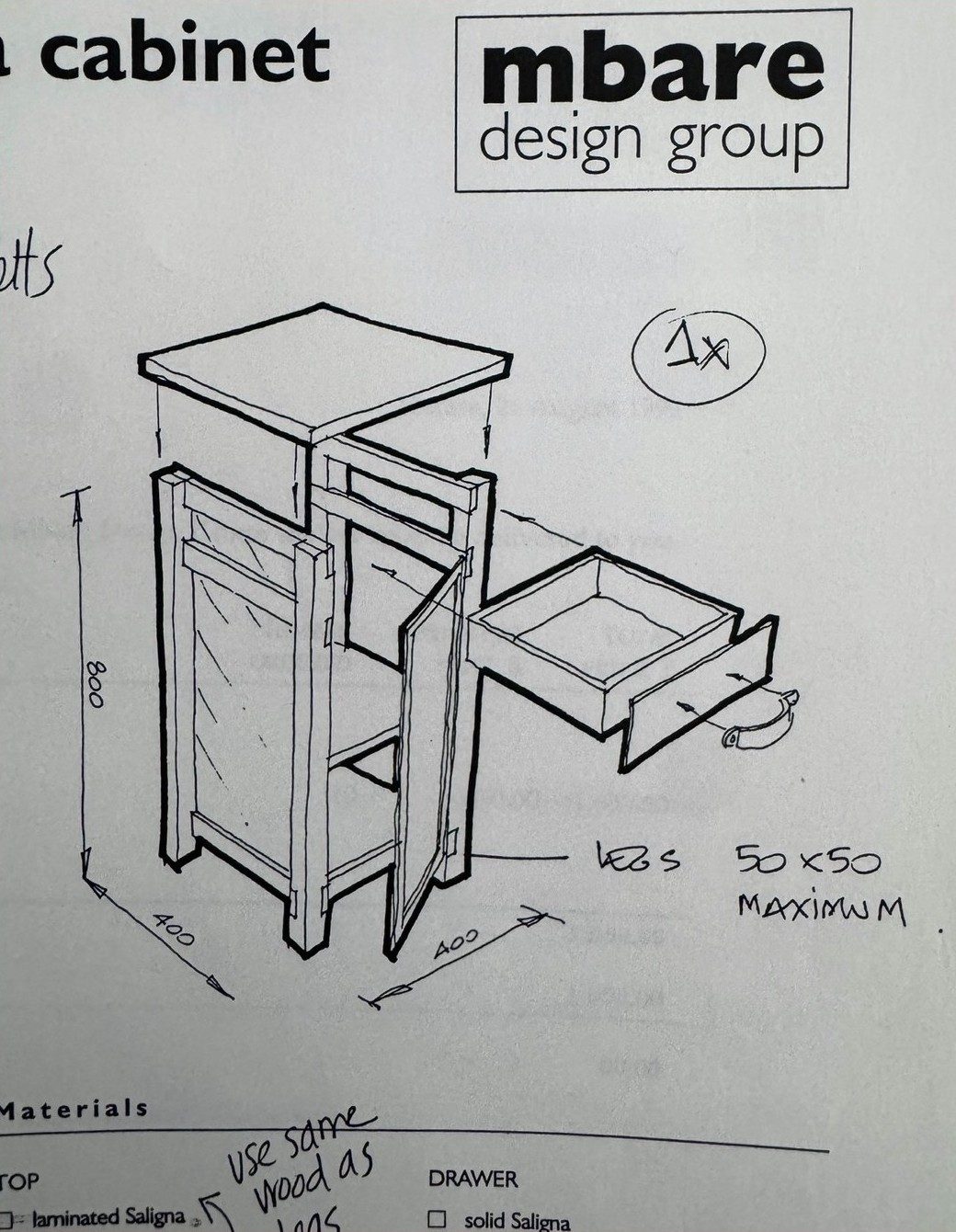
Order form for a Maphosa cabinet, Mbare Design Group, 6 April 1999, with detail of the sketch.
Harare · 1990s
Other products
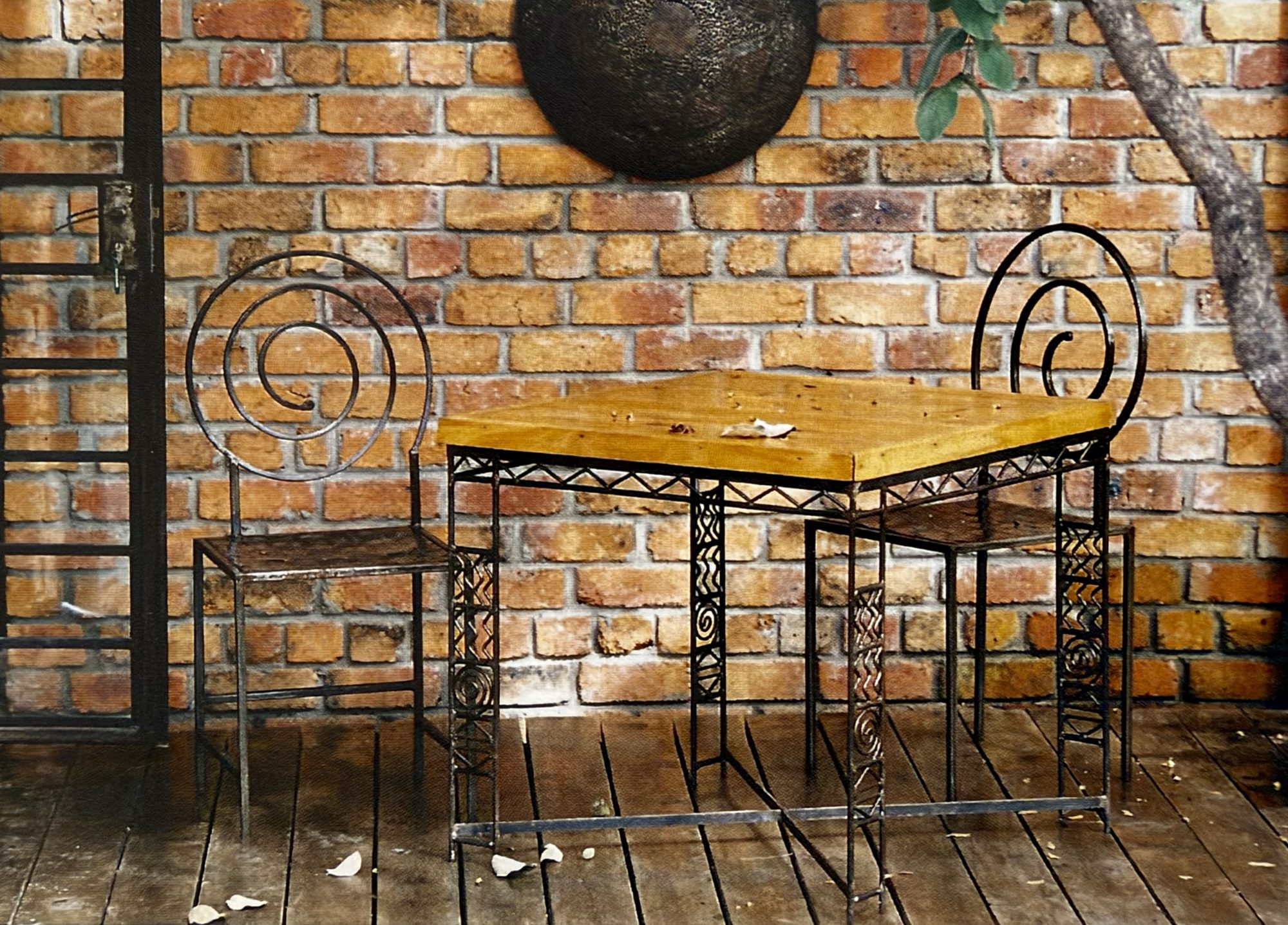
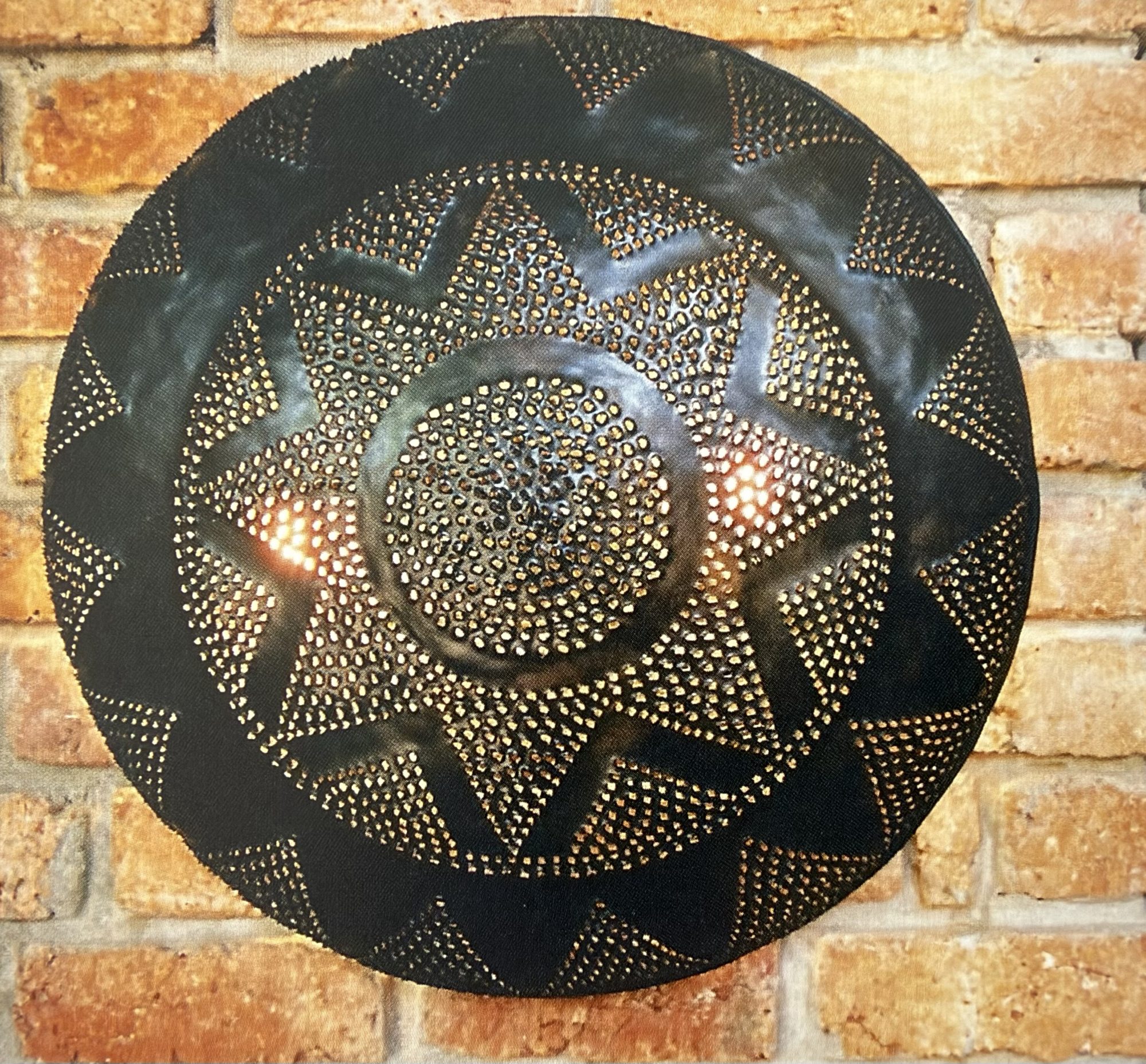
Alongside the Maphosa range, DCO designed other pieces with Mbare’s metalworkers. Used 220-litre oil drums became lamps. Many pieces carried patterns from Great Zimbabwe, the ndoro spiral and the chevron, which gave them a Zimbabwean identity.
Outdoor table and chairs in steel and timber, with seats made from steel-sheet offcuts. The ndoro spiral and the chevron come from Great Zimbabwe.Wall lamp cut from the end of a used 220-litre oil drum, its pattern punched by hand. The same lamp hangs on the wall behind the table.
Partnership · South Africa · since 2022
Wakanda
Design Co-Operation has partnered with Wakanda since 2022. Wakanda develops what it calls alternate service delivery: practical solutions that help communities in under-served areas rely less on local government. Its Food Accelerator supports food entrepreneurs working on the future of food in South Africa.
Its founder, Miles Kubheka, is a strong believer in the power of design. Together, he and Pierre-Yves Panis have looked systematically at how design can serve Wakanda’s work to improve people’s lives, above all by improving access to good, nutritious food, and our collective relationship to it.
DCO’s contribution has included advice on user-centred design, and support for Gcwalisa, a community-run, pay-as-you-go food dispensary.
DCO also connected Wakanda with the Signify Foundation, and helped work out how the Foundation could support it. Together they distributed solar-powered lights and streetlights to food vendors and informal businesses in Johannesburg townships, so they can keep trading safely through power cuts. One solar streetlight now lights Gcwalisa.
“When you ask people what they want, they often tell you what they think you want to hear.”
Miles Kubheka, founder of Wakanda
Miles Kubheka on why design should start from what people actually do: “Listen with your eyes.”
In regular exchange with
Beyond its partnership with Wakanda, DCO works in regular exchange with organisations whose projects need a design lens: making products, services and technologies work for people in under-served communities. Pierre-Yves Panis advises them as their projects call for it, with concrete direction they can act on. These exchanges are informal and ongoing, and both sides recognise them as a collaboration.
Signify Foundation· Eindhoven, Netherlands Indoor and outdoor lighting that improves public safety, economic productivity and resilience in informal settlements and townships.
wasu.ai· Harare, Zimbabwe A Zimbabwean venture using AI in local languages to serve informal-sector businesses.